











 Ukraine
 Russia
IAEA: Zaporizhzhia nuclear plant welder killed in drone attack on 29 October
The International Atomic Energy Agency said on 29 October 2026 that an employee of the Russian-held Zaporizhzhia Nuclear Power Plant had been killed in a drone attack that day. The agency did not say who launched the drone; the Russian-installed plant management blamed Ukrainian forces.
What happened
The International Atomic Energy Agency (IAEA) said late on Thursday, 29 October 2026, that it had been informed that an employee of the Zaporizhzhia Nuclear Power Plant (ZNPP) in Enerhodar, south-eastern Ukraine, had been killed in a drone attack that day. In a post on X, the agency said the victim was reportedly a welder at the plant's centralized repair workshop. Reuters and Breakingthenews.net carried the report the same evening.
IAEA Director General Rafael Grossi said in the same statement that any attack on nuclear plant staff is "completely unacceptable" and violates the agency's Seven Indispensable Pillars for nuclear safety and security during an armed conflict. He again called for maximum military restraint to prevent a nuclear accident.
As the Kyiv Independent noted, the agency did not name the victim, did not say whether the drone was Russian or Ukrainian, and gave no details on where the man was struck or whether any plant equipment was damaged.
On Friday 30 October the Russian-installed plant management, which runs the site under Russia's state nuclear corporation Rosatom, gave its own account on Telegram, reported by Izvestia. It said the welder was riding an electric scooter to work when he was hit, said the strike was carried out by Ukrainian forces, and described it as a deliberate "hunt" for nuclear workers. Maxim Pukhov, the Russian-installed head of Enerhodar, said a man born in 1985 was killed by a drone while on a scooter in the city and died on the spot, according to News.mail.ru.
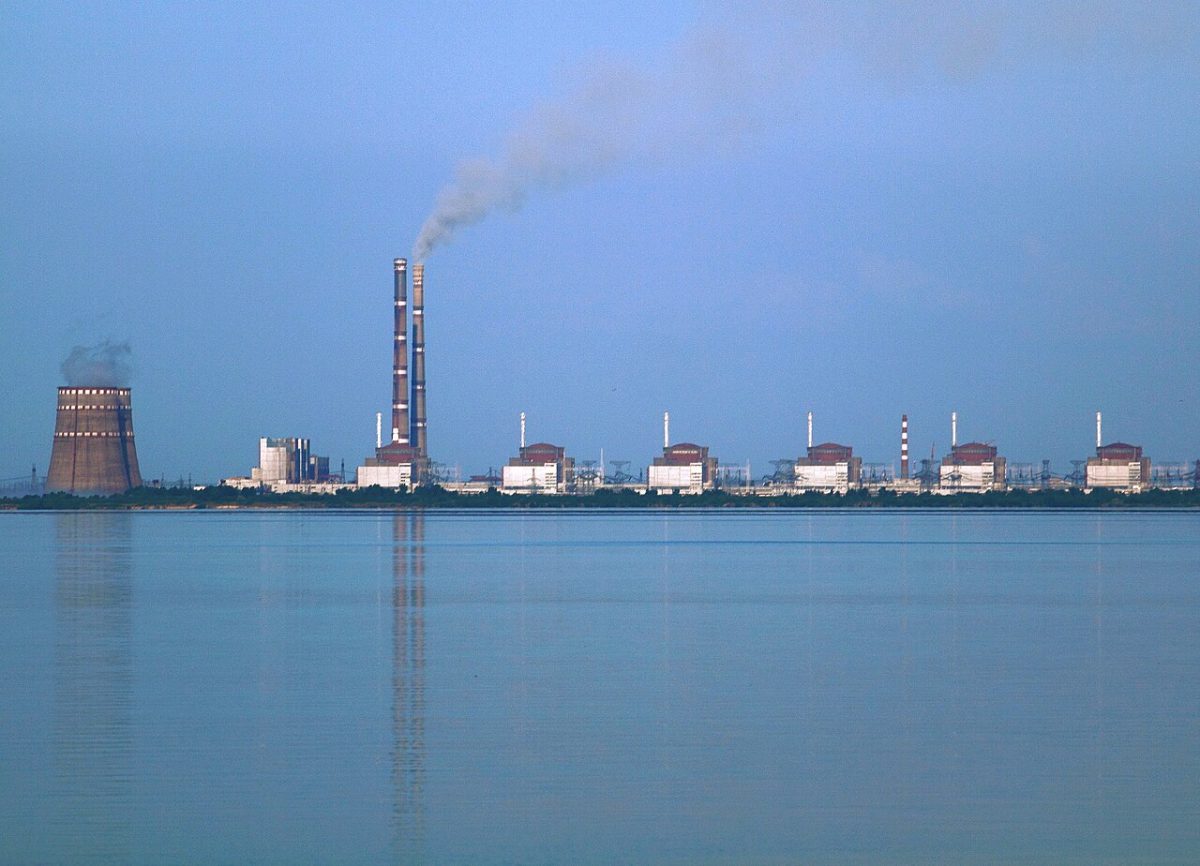
The site and the run of incidents in 2026
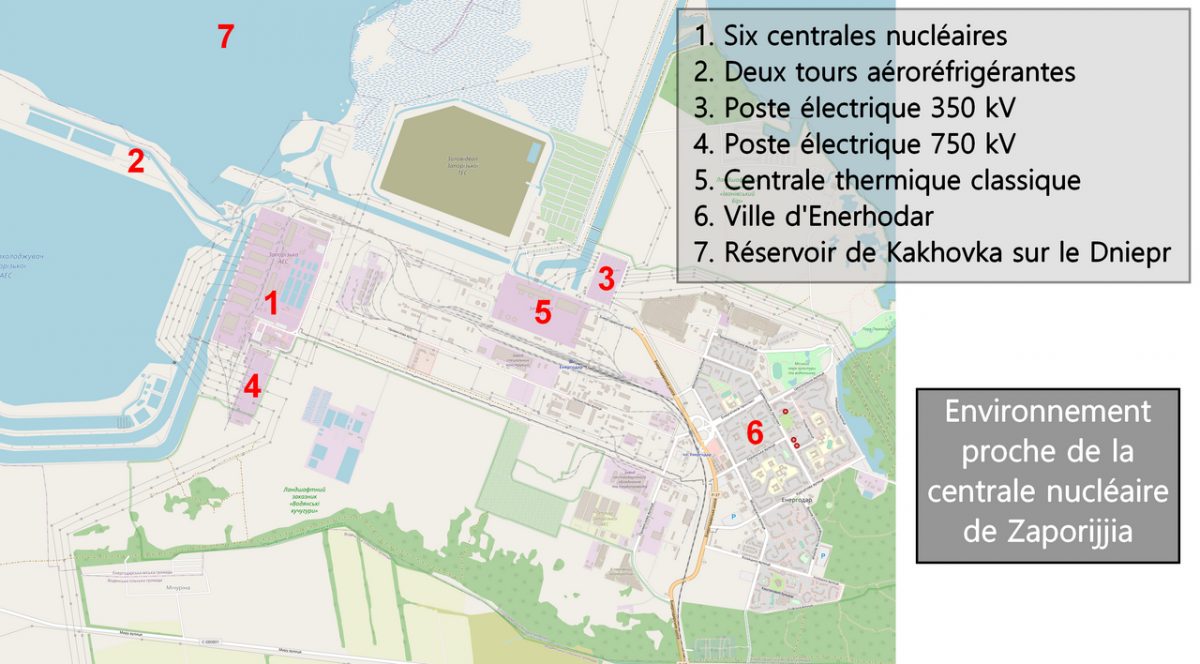
ZNPP is Europe's largest nuclear power plant, with six VVER-1000 reactors. Russian forces took control of it in the first weeks of the full-scale invasion in 2022; Ukraine's Energoatom still considers itself the legal operator. All six reactors have been in shutdown since 2022 to 2023, but reactor cores and spent fuel pools still need continuous cooling, which depends on off-site power or emergency diesel generators.
According to IAEA Update 371 and Update 372, published on 16 and 23 October 2026, the plant currently depends on a single external line, the 330 kV Ferosplavna-1 line. The 750 kV Dniprovska line remains unavailable despite repairs carried out in June 2026. The agency also said no diesel fuel had been delivered to the site since March 2026. In late October, repairs to a backup transformer near the Zaporizhzhia Thermal Power Plant were completed under the eighth IAEA-facilitated localized ceasefire, strengthening the connection to the Ferosplavna-1 line.
The 29 October death is the fourth fatal incident involving plant personnel reported this year, all of them away from the reactor buildings:
- July 2026: Rosatom said a Ukrainian drone attack on a service car killed the plant's chief engineer and the vehicle's driver.
- 18 August 2026: the IAEA reported that a drone exploded at about 06:00 at a bus stop used by plant staff, causing 16 casualties among staff and subcontractors, including one death and three serious injuries. The plant director called it the worst event the plant had faced.
- 21 October 2026: Reuters reported that plant management said a bus driver was killed after two consecutive days of drone attacks on buses carrying staff. The IAEA said the plant significantly reduced on-site staffing on 22 October as a result.
- 29 October 2026: a welder killed by a drone, according to the IAEA.
Separately, the IAEA reported drone strikes on 19, 20 and 27 September 2026 that damaged transformers at the nearby thermal power plant, which are critical to the ZNPP's external power supply.
Reactions
"Any attack on nuclear plant staff is completely unacceptable." Rafael Grossi, IAEA Director General, 29 October 2026
The Russian-installed plant press service called the strike "barbarism", said it was intended to intimidate nuclear workers, and said plant staff and all of Rosatom were grieving, according to Izvestia and News.mail.ru.
The Ukrainian outlet UA.News headlined the death as the result of a Russian drone attack, citing the IAEA statement; the IAEA itself made no attribution. No statement from the Ukrainian government or from Energoatom on this specific incident had been found at the time of writing.
Fontanka.ru reported that Grossi said in October 2026 that the IAEA does not intend to publicly name the party responsible for attacks on the plant, a position the agency has held since it confirmed drone hits on a reactor containment building in April 2024 without assigning blame.
On the same day, Russian missile and drone attacks on the Ukrainian-controlled city of Zaporizhzhia injured at least 14 people, including a child, according to Ukraine's National Police as cited by dpa.
Context: the rules the IAEA is invoking
Grossi set out the Seven Indispensable Pillars in March 2022. They include the requirement that operating staff must be able to carry out their safety and security duties free of undue pressure. In May 2023 he presented Five Concrete Principles to the UN Security Council, the first of which is that there should be no attack of any kind from or against the plant, in particular targeting the reactors, spent fuel storage, other critical infrastructure or personnel. The IAEA has kept a permanent expert mission (ISAMZ) at the site since September 2022.
Under international humanitarian law, nuclear electrical generating stations are listed among "works and installations containing dangerous forces" in Article 56 of Additional Protocol I to the Geneva Conventions, and plant employees travelling to work are civilians protected from attack. Neither Russia nor Ukraine has acknowledged responsibility for any of this year's strikes on ZNPP personnel; each has accused the other of endangering nuclear safety at the site since 2022.
The practical safety concern raised by the IAEA in its October updates is staffing. After the 21 October bus strike the plant cut the number of people on site, and the agency has repeatedly said that a reduced workforce, combined with a single external power line and no diesel deliveries since March, narrows the plant's margins if cooling is interrupted.
What is confirmed and what is not
- Confirmed by the IAEA: an employee of ZNPP was killed in a drone attack on 29 October 2026; the victim was reportedly a welder at the centralized repair workshop.
- Stated by the Russian-installed management only: that the man was on an electric scooter on his way to work, that he was born in 1985, and that the drone was Ukrainian.
- Not confirmed: who launched the drone. The IAEA has not attributed the strike, Ukraine has not commented, and Ukrainian media reports describing the drone as Russian cite the IAEA statement, which contains no such claim.
- Not reported: any damage to reactors, cooling systems or power lines linked to this incident. The IAEA's statement concerned the death of a staff member, not the condition of the plant.
Sources
- IAEA post on X: employee of ZNPP killed by drone attack IAEA (X)
- Drone attack reportedly kills worker at Russian-occupied Zaporizhzhia Nuclear Power Plant Kyiv Independent
- The deceased employee of the NPP was traveling on an electric scooter at the time of the attack Izvestia (English)
- Update 372 – IAEA Director General Statement on Situation in Ukraine IAEA
- Update 371 – IAEA Director General Statement on Situation in Ukraine IAEA
- Driver at Russian-held Zaporizhzhia nuclear plant killed in drone attacks, managers say Reuters via US News
- IAEA post on X: drone exploded at bus stop used by ZNPP staff IAEA (X)
- IAEA: Zaporizhzhya nuclear plant worker killed in drone attack dpa via Yahoo News
- Сотрудник ЗАЭС погиб в результате удара БПЛА: реакция МАГАТЭ Fontanka.ru