Nuclear Blast Radius: How Far Does a Nuke Reach?
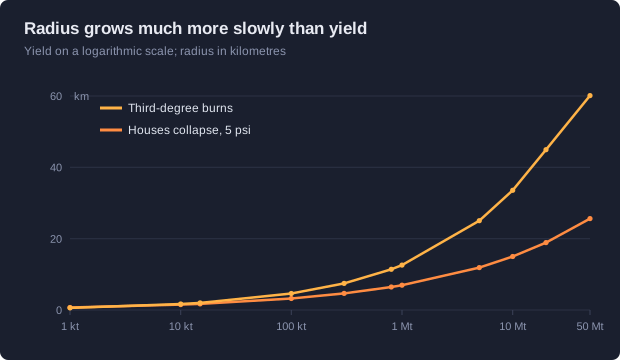
There is no single blast radius for a nuclear weapon. A bomb draws several circles at once, and each one marks a different kind of harm: the fireball, the collapse of buildings, burns on exposed skin, broken windows. Their size depends mostly on yield, and it grows far more slowly than the yield does. A weapon a thousand times more powerful than the Hiroshima bomb does not reach a thousand times farther. It reaches about ten times farther.
The table below shows the main rings for weapons from a 20-ton artillery shell to the 50-megaton Tsar Bomba. The figures come from the same model the simulator uses, for an airburst at the height that spreads heavy blast damage as widely as possible.
| Yield | Example | Fireball | Heavy damage 20 psi | Houses collapse 5 psi | 3rd-degree burns | Windows break 1 psi |
|---|---|---|---|---|---|---|
| 0.02 kt | Davy Crockett shell | 13 m | 80 m | 190 m | 160 m | 590 m |
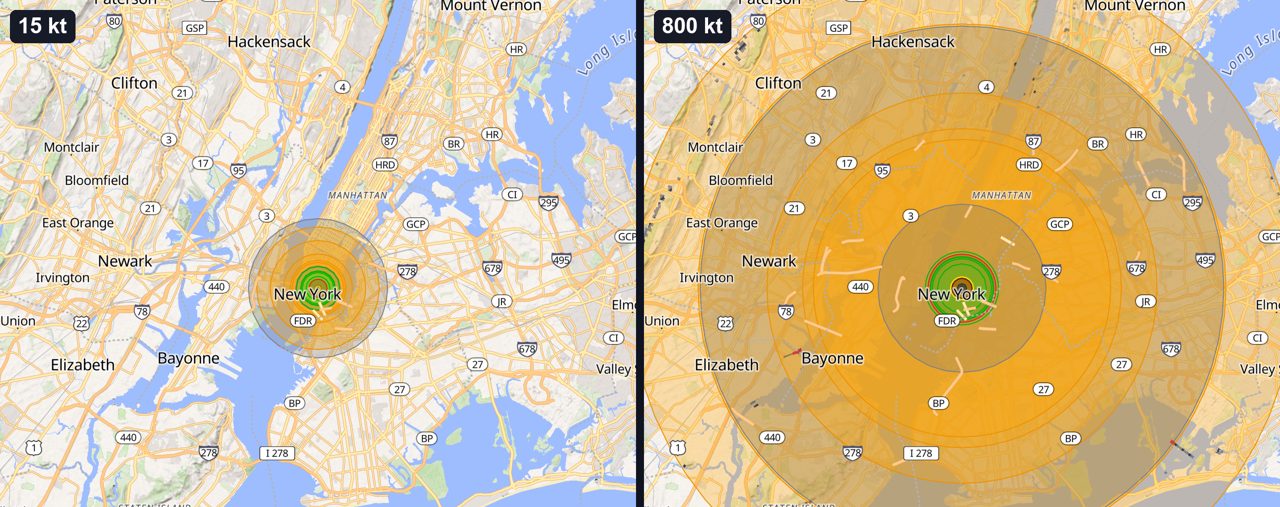
| 15 kt | Hiroshima | 180 m | 0.7 km | 1.7 km | 2.0 km | 5.4 km |
| 100 kt | W76 submarine warhead | 390 m | 1.3 km | 3.2 km | 4.6 km | 10 km |
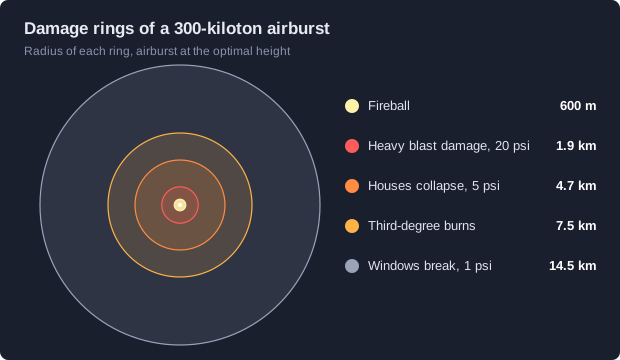
| 300 kt | Typical modern warhead | 600 m | 1.9 km | 4.7 km | 7.5 km | 14.5 km |
| 800 kt | Topol / Sarmat warhead | 880 m | 2.6 km | 6.5 km | 11.4 km | 20 km |
| 1.2 Mt | B83 bomb | 1.0 km | 3.0 km | 7.4 km | 13.6 km | 23 km |
| 10 Mt | Ivy Mike | 2.4 km | 6.1 km | 15 km | 34 km | 47 km |
| 50 Mt | Tsar Bomba | 4.6 km | 10.4 km | 26 km | 60 km | 80 km |
Reading the rings
Engineers describe blast damage by overpressure, the jump in air pressure above normal, measured in pounds per square inch (psi). At 20 psi reinforced concrete buildings fail and almost nobody inside survives. At 5 psi ordinary houses are flattened, and the casualty model of the US Office of Technology Assessment counts about half the people in this zone as killed. At 1 psi the buildings stay up but the glass does not, and flying shards injure people across a huge area.
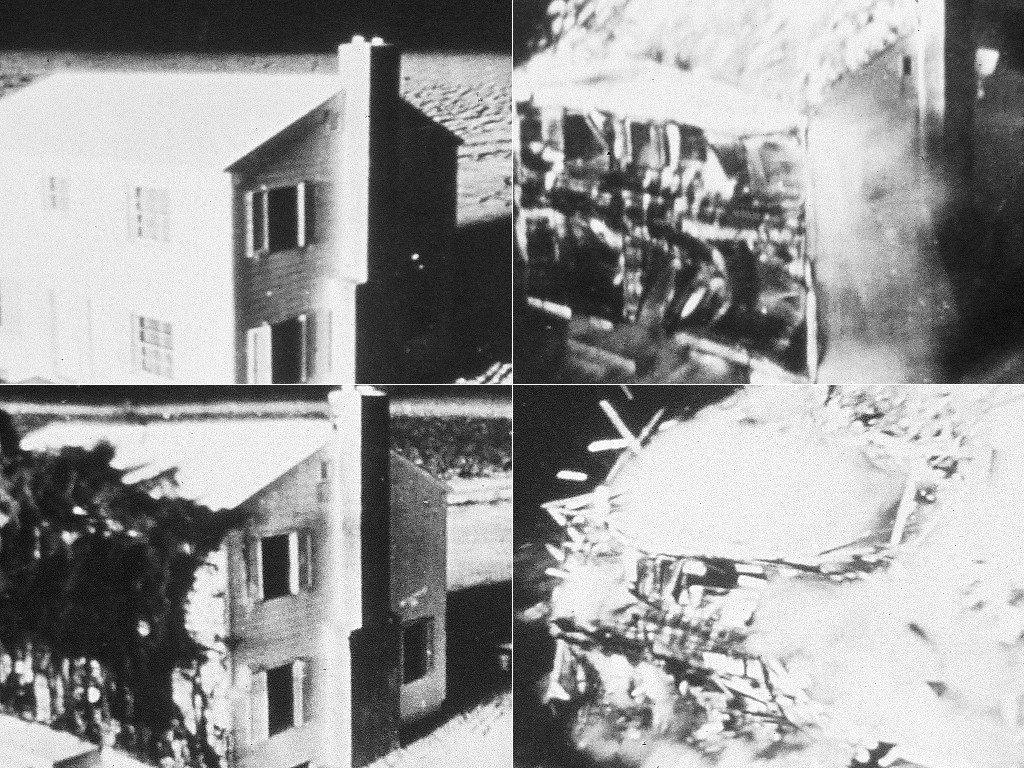
The burn ring behaves differently from the blast rings. Heat travels as light, in straight lines and at once, so its reach depends on how clear the air is and on whether anything stands in the way. On a clear day the third-degree burn radius of a large weapon extends well beyond the zone where houses collapse. Haze, rain or a single hill can cut it sharply, which is why the simulator can draw terrain shadows.
Initial radiation has the shortest reach of all for big weapons. For a 300-kiloton burst a lethal dose of about 500 rem extends roughly 2 km, well inside the circle of total destruction. Small weapons are the exception: for anything under a few kilotons the radiation ring is wider than the heavy blast ring.
Why ten times the yield is only about twice the distance
An explosion spreads its energy through a volume of air, and volume grows with the cube of distance. So the distance at which a given overpressure occurs grows as the cube root of the yield. Multiply the yield by 8 and the blast rings double. Multiply it by 1,000 and they grow tenfold. Heat follows a slightly steeper curve because a larger fireball also shines for longer.
This is the reason modern arsenals moved away from giant bombs. Ten warheads of 100 kilotons each, spread over a city, destroy a much larger area than one weapon of 1 megaton, even though the total yield is the same.
Airburst or ground burst
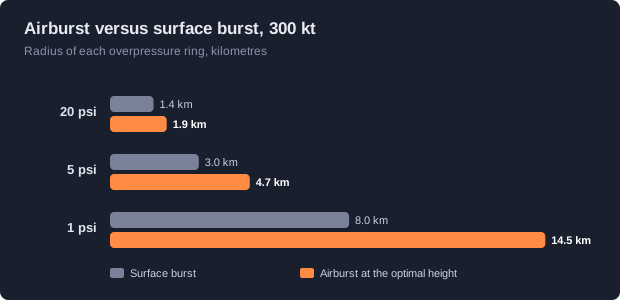
Height changes the picture. A weapon detonated high above the target, around 2 km up for a 300-kiloton warhead, lets the shock wave reflect off the ground and reinforce itself. Its 5 psi ring ends up about one and a half times wider than for the same weapon exploding on the surface. A ground burst spends part of its energy digging a crater, its blast reaches less far, and in exchange it throws up the dust that becomes radioactive fallout. Hardened military targets such as missile silos are attacked with ground bursts; cities, in war planning, with airbursts.
What the numbers leave out
A ring on a map is an average over flat, open ground. Real cities have hills that shield whole districts and tall buildings that both block and funnel the blast. Fires started by the heat pulse can merge into a firestorm, as happened in Hiroshima, and spread damage beyond the rings. None of the circles account for the collapse of hospitals, roads and power that follows. Use them as a sense of scale. To see them over your own street, open the simulator, pick a city and a weapon, and press Detonate.