How to Survive a Nuclear Attack: What to Do, Minute by Minute
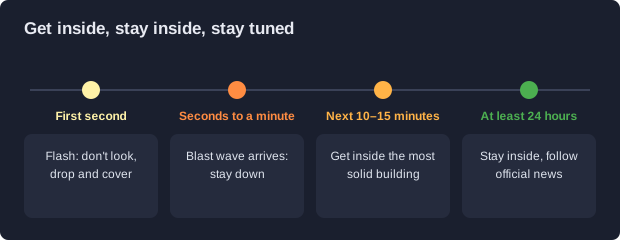
Most people within the area of total destruction around a nuclear explosion would not survive, whatever they did. But that area is small compared with the region where a person's choices in the next minutes and hours decide whether they live. Official civil defence advice in the United States sums those choices up in three words: get inside, stay inside, stay tuned. This page explains what each step means and why it works.
If you see the flash
The light of a nuclear explosion arrives before anything else, brighter than the sun. Do not look toward it. If you are outdoors, drop to the ground at once, face down, with your hands under your body and your head covered, ideally behind something solid: a wall, a kerb, the far side of a ditch. If you are indoors, get away from windows and get down behind a sturdy piece of furniture or an inner wall.
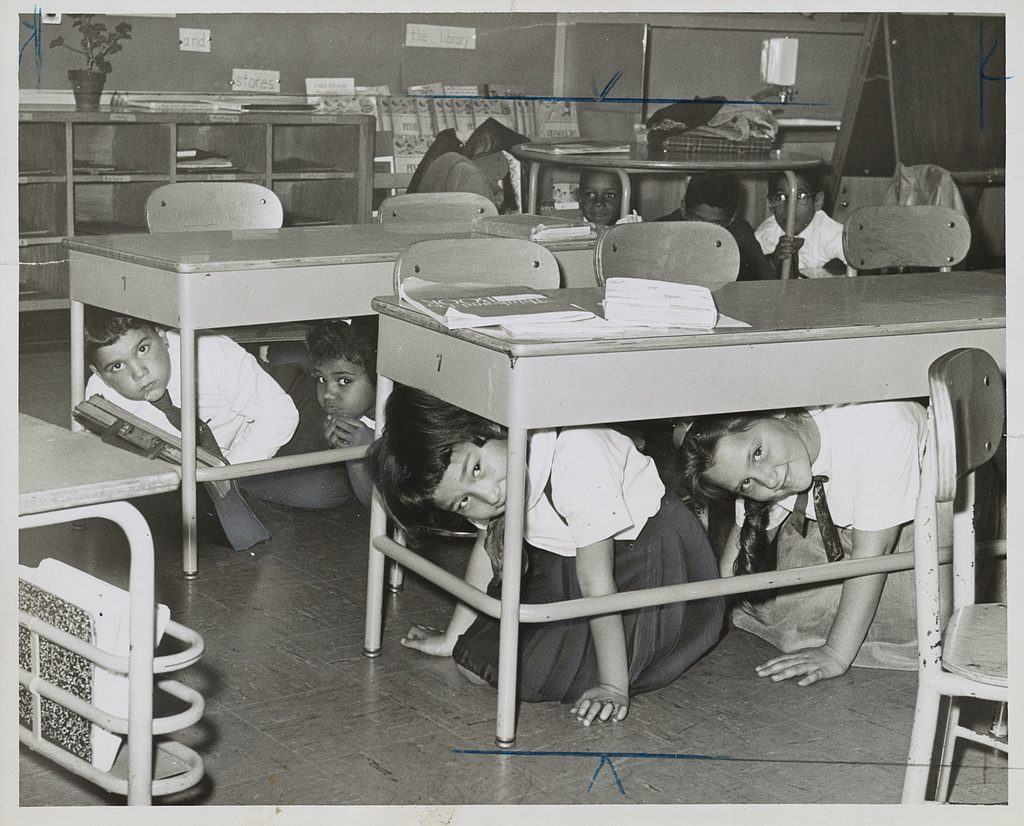
This is exactly the drill that schoolchildren practised in the 1950s, and it was often mocked. It is still the right advice. Away from the centre, most blast injuries come from glass and debris thrown by the shock wave, and lying flat behind cover avoids much of that. The heat pulse lasts several seconds for a large weapon, so getting out of the line of sight quickly also reduces burns.
Wait for the blast
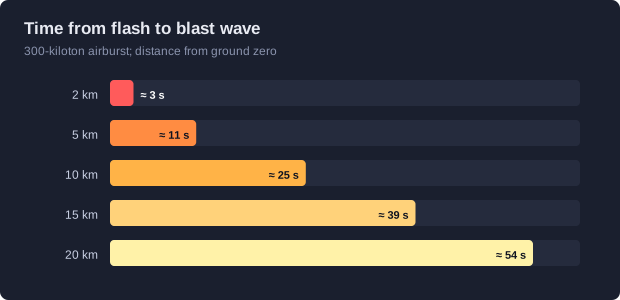
The shock wave travels much slower than light. Depending on the distance it can take from a couple of seconds to most of a minute to arrive, and the period of quiet in between is dangerous: people who go to the window to look are the ones cut by glass when the pressure wave hits. Stay down until the blast has passed. A strong wind blowing back toward the explosion often follows a few seconds later.
Get inside, within minutes
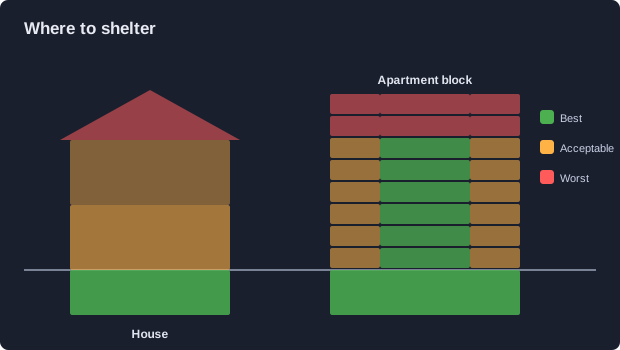
If the explosion was a surface burst, radioactive fallout will start to come down within minutes near the site and later farther downwind. Before it arrives, get into the most solid building you can reach in a few minutes. Brick or concrete is better than wood, below ground is better than above it, and the core of a big block is better than a room next to its walls or roof. A car gives almost no protection; leave it for a building if one is close.
If you were outdoors when fallout might already have been falling, take off your outer layer of clothing before you go deeper inside, put it in a plastic bag and leave it away from people. Removing the outer layer gets rid of most of the contamination. Then wash with soap and water, and shampoo your hair without conditioner, which can bind radioactive particles to it. Wipe the fur of pets that were outside.
Stay inside for at least 24 hours
Fallout radiation weakens quickly: by the time a day has passed it has dropped to well under a tenth of its level one hour after the explosion, as described in the article on fallout. That is why staying put is the single most important step. Unless officials tell you to move or you are in immediate danger from fire or collapse, stay inside for at least a day.
This also applies to family members. If children are at school, the school is expected to shelter them, and parents travelling across a contaminated area to reach them would expose themselves and gain little. Food in sealed packages and water in closed containers are safe to use.
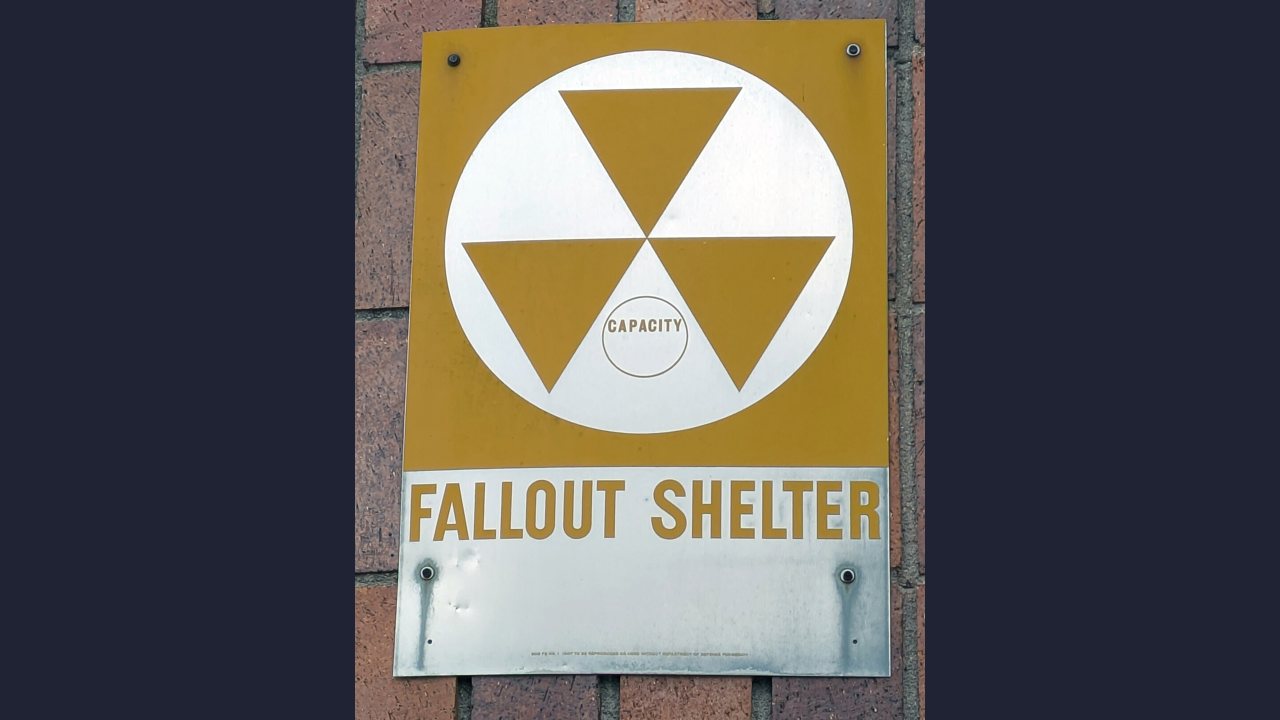
Stay tuned
Use a battery or hand-crank radio or a phone to follow official instructions. They will tell you when it is safe to leave, which routes to use and where to go for medical help. Potassium iodide tablets protect only the thyroid gland, and only against radioactive iodine; take them if the authorities advise it, not as a general precaution.
What you can do today
Look at the buildings where you spend most of your time and decide where the best sheltering spot would be: a basement, a stairwell or an inner corridor several floors from the roof. Keep a radio, water and a few days of food somewhere you can reach. To understand what distances matter for your own city, put a modern warhead over it in the simulator and look at where your home falls among the rings. The official guidance in full is published at Ready.gov.