














About NukeSimulator
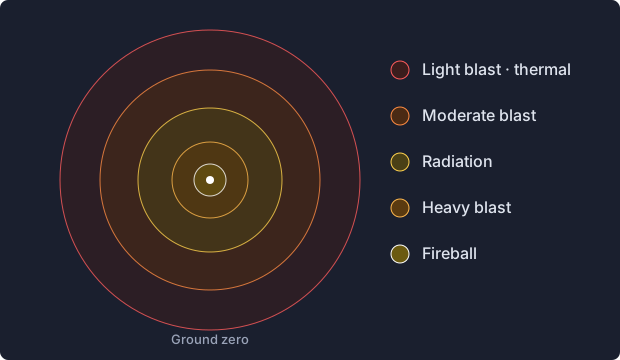
NukeSimulator is a free, interactive nuclear explosion simulator. It lets you detonate a virtual nuclear weapon over any point on Earth — your home town, a world capital, or the middle of the ocean — and see the estimated consequences drawn directly on the map: the fireball, the blast damage rings, the reach of thermal radiation, the radiation dose zones and the plume of radioactive fallout.
Why this site exists
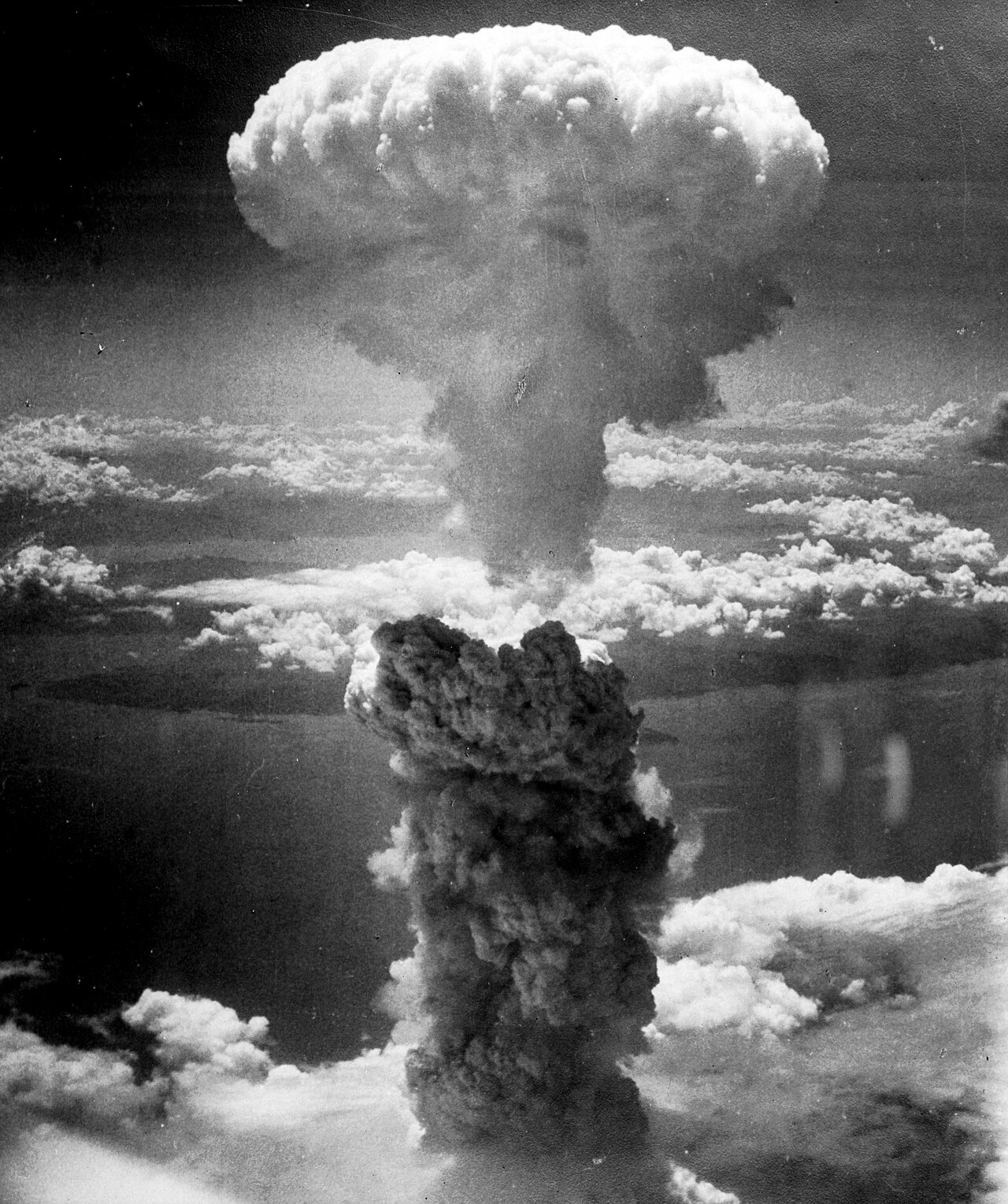
Nuclear weapons are abstract for most people. Numbers like «800 kilotons» mean very little until you see what that yield does to a city you actually know. Putting the physics on a familiar map turns statistics into something you can grasp — and that understanding is the whole point of this project. NukeSimulator is an educational tool: it does not glorify nuclear weapons, it shows why they must never be used again.
The idea of visualising nuclear effects on a web map was pioneered by historian of science Alex Wellerstein with his NUKEMAP project, and this site follows in that tradition. The underlying physics comes from openly published, declassified sources — see our methodology page for details.
How to use the simulator
- Pick a target. Choose a preset city, search for any place, or simply drag the marker anywhere on the map.
- Pick a weapon. Select a real historical or currently deployed warhead, from the 20-ton Davy Crockett to the 100-megaton design version of the Tsar Bomba, or type in any yield in kilotons.
- Detonate. The map shows the effect rings; click «What does that mean?» for a plain-language explanation of every zone. You can switch between airburst and surface burst, enable the fallout plume, stack multiple detonations and share a permanent link to your scenario.
What the results mean — and what they don't
Every number the simulator produces is a scientific estimate based on idealised models. Real explosions are affected by weather, terrain, building density and the exact weapon design, so actual effects would differ. Treat the output as an educated approximation for learning and discussion, not as an emergency-planning tool. The effects of a nuclear explosion page explains each damage mechanism in depth.
Learn more
If you are new to the subject, a good reading order is: how nuclear weapons work, then what an explosion actually does, then Hiroshima and Nagasaki — the only two times these weapons were used against people — and finally who possesses nuclear weapons today.
Who is behind the site
NukeSimulator is built and maintained by Alex, an independent web developer who has been making websites since the mid-2000s. Over twenty years of freelance work he has done everything from small reference sites to map-based services, and this project — online since 2022 — grew out of two long-standing interests: interactive maps and the history of the nuclear age. He writes the code, keeps the physics models up to date, prepares the articles and answers the mail himself; translations are checked with native speakers whenever possible.
Contact
Found a mistake in the numbers, have an idea for the simulator, want to write about it or use it in a lesson? Use the contact page or write to [email protected] — every message is read. Corrections of historical data and translations are especially welcome.