Nuclear Winter: How a Nuclear War Could Cool the Planet
Nuclear winter is the idea that a large nuclear war would kill more people through the sky than through the bombs. Burning cities would send so much soot into the upper atmosphere that sunlight would be dimmed for years, temperatures would fall, rain would fail, and harvests around the world would collapse. The countries that fired the weapons would starve together with those that never took part.
How the idea appeared
For the first decades of the nuclear age, planners counted deaths from blast, fire and fallout and stopped there. In 1983 five American scientists, Richard Turco, Owen Toon, Thomas Ackerman, James Pollack and Carl Sagan, published a study known by their initials as TTAPS. They modelled what smoke from hundreds of burning cities would do to the climate and found that land temperatures in the northern hemisphere could drop below freezing even in summer. Soviet modellers reached similar conclusions the same year. The phrase «nuclear winter» came from that paper.
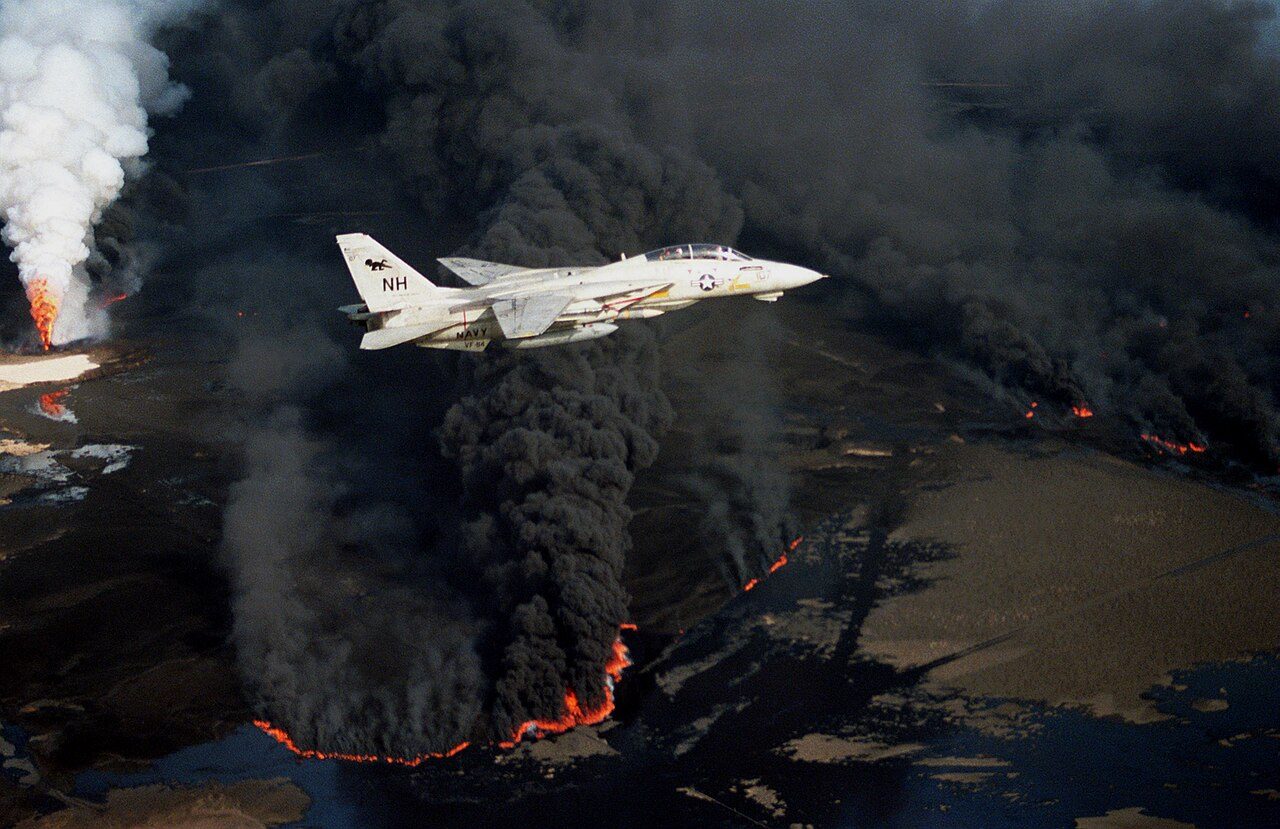
The idea was attacked from the start, and some early predictions were too strong. When Iraqi forces set more than 600 Kuwaiti oil wells on fire in 1991, Sagan warned that the smoke might rise high enough to cool the region seriously. It did not: most of the smoke stayed in the lower atmosphere and rained out within weeks. Critics treated this as a refutation. Defenders pointed out that oil fires are hot but slow, and that a burning city produces a far more intense column of heat, which is exactly what lifts smoke higher.
Why the stratosphere matters
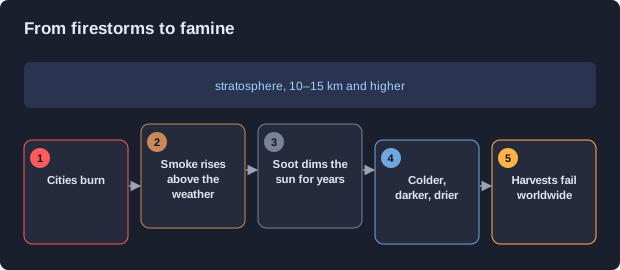
Smoke near the ground is washed out by rain within days. Smoke that reaches the stratosphere, above roughly 10 to 15 kilometres, sits above the weather. There the black soot absorbs sunlight, heats up and rises even further, so it can stay aloft for years. Firestorms like those in Hamburg, Dresden and Hiroshima produce updrafts strong enough to carry smoke that high.
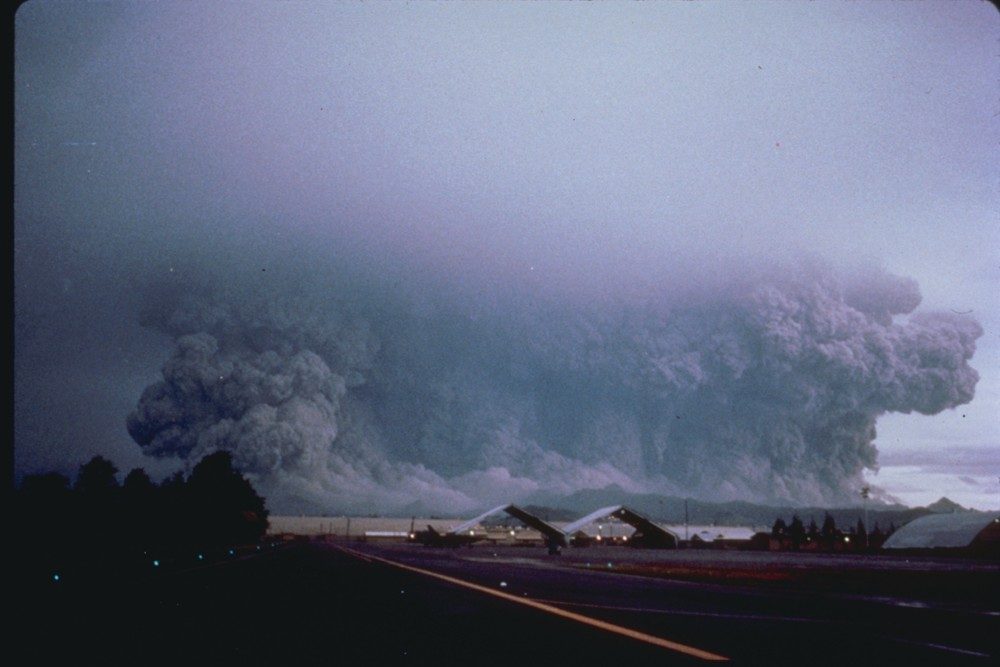
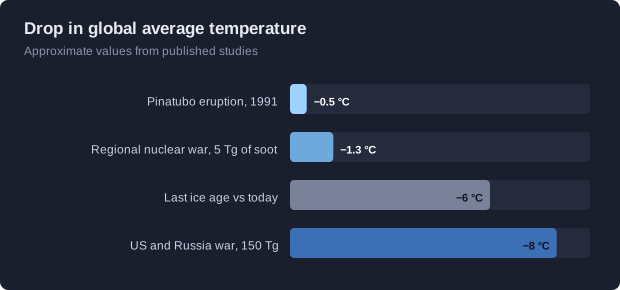
Nature has run a milder version of the experiment. In 1991 Mount Pinatubo in the Philippines put about 15 million tonnes of sulphur dioxide into the stratosphere, and the average temperature of the planet fell by about half a degree for the next year. Volcanic sulphate reflects sunlight; soot absorbs it, which makes it more effective at darkening the surface.
What modern models say
Climate models have improved enormously since 1983, and the main finding has survived. Researchers led by Alan Robock and Lili Xia at Rutgers University have run a series of scenarios measured by the amount of soot that reaches the stratosphere, in teragrams (millions of tonnes).
- A regional war, for example 100 Hiroshima-sized weapons exchanged between India and Pakistan, could put about 5 teragrams of soot into the stratosphere and cool the planet by roughly 1 to 1.5 °C for several years.
- A full exchange between the United States and Russia could produce around 150 teragrams and cool the global average by about 7 to 8 °C. That is more than the cooling of the last ice age, which was about 6 °C below today's average, and it would happen in a single year rather than over millennia.
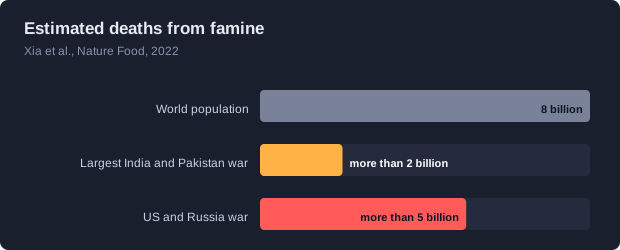
Cold is only part of the problem. Less sunlight also means less evaporation and less rain, especially during monsoons, and a shorter growing season. In a 2022 study in Nature Food the same group estimated that in the largest India and Pakistan scenario they modelled, more than 2 billion people could die of famine, and after a war between the United States and Russia, more than 5 billion. Most of those deaths would be far from any target.
The open questions
The largest uncertainty is how much soot burning cities would really produce and how high it would go. A team at Los Alamos National Laboratory modelled the fires in 2018 and found much less smoke reaching the stratosphere than the Rutgers group assumed, and therefore milder cooling. Others have answered that the Los Alamos model used a sparsely built city that burns poorly. The debate is about how severe the effect would be, not about whether it exists.
What everyone agrees on is that the climate consequences scale with the number of cities set on fire. That links nuclear winter directly to the size of the arsenals that exist today. The simulator shows the burn ring of a single weapon over any city; nuclear winter is what hundreds of those rings would add up to.