Neutron Bomb: How It Works and Why It Was Built
The neutron bomb has a reputation it does not quite deserve. It was described in newspapers of the 1970s as a weapon that kills people and leaves buildings standing, a capitalist bomb that spares property. The reality was narrower and stranger: a small hydrogen bomb tuned to release an unusually large share of its energy as a burst of neutrons, built to stop tank formations rather than to destroy cities.
What makes it different
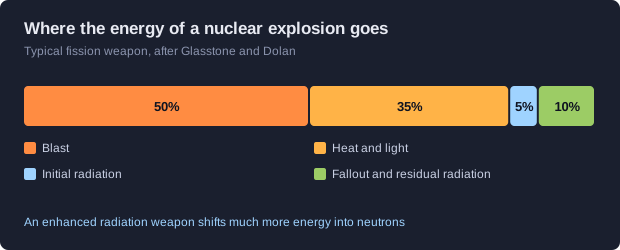
An ordinary nuclear explosion divides its energy roughly as follows: about half goes into the blast wave, about a third into heat and light, around 5% into the initial burst of radiation and the rest into fallout and residual radioactivity. For large weapons the radiation hardly matters, because anyone close enough to receive a lethal dose is already inside the zone where everything is crushed and burned.
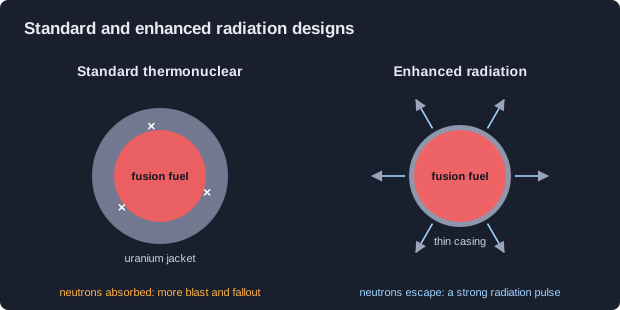
The official name of the neutron bomb is enhanced radiation weapon. It is a small two-stage thermonuclear device, typically around one kiloton, built so that the fast neutrons from the fusion stage escape instead of being absorbed. Designers left out the thick uranium jacket that normally surrounds the fusion fuel and adds yield, and used materials that let neutrons through. The result is a weapon with modest blast and heat but an intense, short pulse of neutrons that passes through steel and earth more easily than gamma rays do.
Why the army wanted it
The idea came from Samuel Cohen, a physicist at the RAND Corporation, at the end of the 1950s. NATO planners of the time faced the prospect of thousands of Soviet tanks crossing into West Germany. Tank armour protects crews well against blast and heat, but neutrons go through it. A few small enhanced radiation warheads could disable the crews of an armoured attack while causing less blast damage to the towns of the country being defended, which would after all have been allies' towns.
Even at one kiloton the radiation ring of a nuclear weapon reaches beyond its heavy blast ring. The simulator's model gives the following radii for an ordinary 1 kt airburst; an enhanced radiation weapon pushes the radiation ring considerably further.
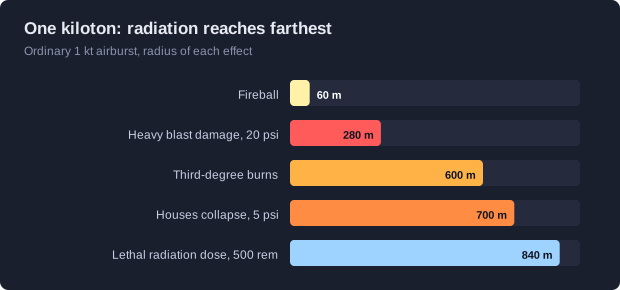
That reversal is the whole point of the design. It also exposes the myth. The neutron bomb was never a weapon that left buildings undamaged: within several hundred metres of the burst, blast and fire still flatten ordinary houses. The «clean» part was only relative to a larger conventional nuclear weapon that would have been used for the same job.
A political storm
In 1977 an article in the Washington Post revealed that the United States planned to deploy enhanced radiation warheads in Europe. The reaction was fierce on both sides of the Iron Curtain. Soviet propaganda called it the ultimate capitalist weapon; hundreds of thousands of people demonstrated in Western Europe. In April 1978 President Jimmy Carter postponed production. President Ronald Reagan reversed the decision in 1981, and the warheads were built but kept in storage in the United States rather than in Europe.
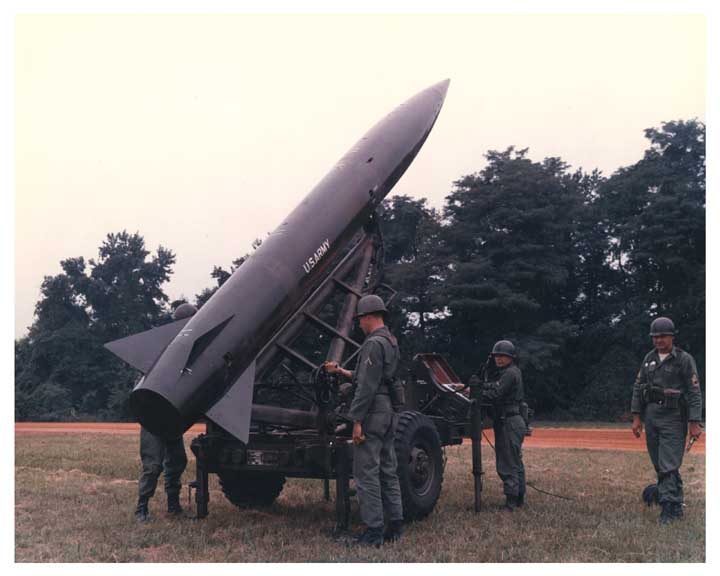
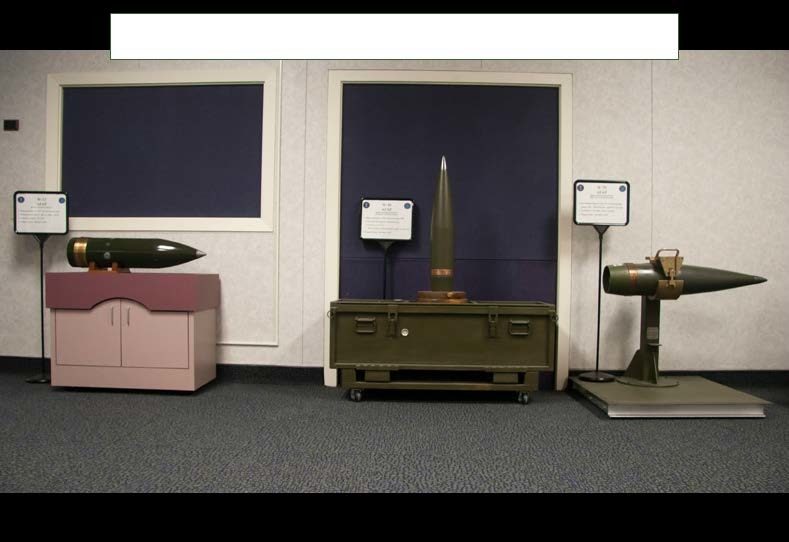
Two American types existed: the W70 Mod 3 for the Lance missile and the W79 for eight-inch artillery shells. France tested its own design in the 1980s, and the Soviet Union is believed to have developed similar weapons. When the Cold War ended, the American warheads were withdrawn, and the last were dismantled by the early 2000s.
Why it still comes up
The neutron bomb belongs to a family of ideas that keep returning: nuclear weapons small or precise enough to be usable on a battlefield. Low-yield warheads are again part of several arsenals today, and the arguments of the 1970s about whether such weapons make nuclear war more likely have not been settled. To see how differently a small weapon behaves from a large one, compare a 1-kiloton and a 1-megaton detonation in the simulator and watch which ring is outermost. The broader design principles are explained in hydrogen bomb vs atomic bomb.