Dirty Bomb vs Nuclear Bomb: What a Dirty Bomb Really Does
A dirty bomb is an ordinary explosive packed with radioactive material. The explosion scatters the material over the surrounding streets. There is no chain reaction, no fireball of the nuclear kind, no mushroom cloud: the blast is the size of the conventional charge, a few kilograms or a few hundred kilograms of explosive. In the language of security agencies it is a radiological dispersal device, and it belongs to a completely different class of weapon from a nuclear bomb.
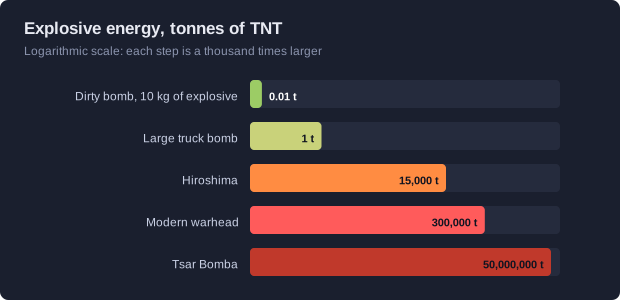
Dirty bomb and nuclear bomb side by side
| Dirty bomb | Nuclear bomb | |
|---|---|---|
| Source of energy | Chemical explosive | Fission or fusion of atomic nuclei |
| Radioactive material | Any source: medical, industrial, research | Weapons-grade uranium or plutonium |
| Destroyed area | A building or part of a street | Several square kilometres to hundreds |
| Main harm | Contamination, fear, cost of cleanup | Blast, heat, radiation, fire |
| Difficulty of making | Low technically; the source is the hard part | Extremely high; a state-level project |
| Ever used | No successful attack on record | Twice, in 1945 |
How much harm it would do
Most people hurt by a dirty bomb would be hurt by the explosion itself, in the same way as by any bomb of that size. The radiation dose to people nearby would in most realistic cases be small: the material is spread thin, and the most dangerous sources are hard to disperse as fine powder. The US Nuclear Regulatory Commission expects that in most cases people near the blast would not receive enough radiation to become seriously ill.
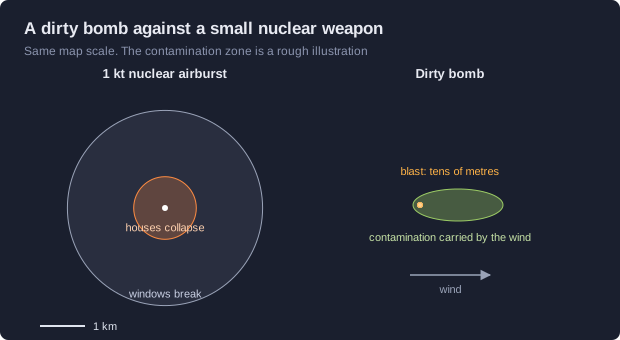
The damage lies elsewhere. Contamination of a few city blocks, or of a few square kilometres if the wind carries the dust, would close them for months. Removing radioactive material from asphalt, concrete and drains is slow and very expensive, and some buildings might have to be torn down. Add panic and the economic disruption of shutting down a city centre, and the weapon's main effect becomes clear. It is a weapon of fear and economic damage more than of mass death.
Goiânia, 1987: a dirty bomb without a bomb
The closest real-world example involved no explosive at all. In September 1987 two men took a radiotherapy machine from an abandoned clinic in Goiânia, Brazil, and sold its parts to a scrapyard. Inside was a capsule holding about 93 grams of caesium-137 chloride, a powder that glowed blue in the dark. The scrapyard owner showed it to friends and relatives; a six-year-old girl rubbed it on her skin and ate a sandwich with it on her hands.
Four people died, including the girl. Around 250 were found to be contaminated, and more than 100,000 queued at a football stadium to be checked. Several houses were demolished, topsoil was removed from whole lots, and the cleanup filled thousands of drums and containers with radioactive waste. The accident shaped how emergency services think about dirty bombs: the hardest problems were finding the contamination and calming a frightened city.
Why it has never been used
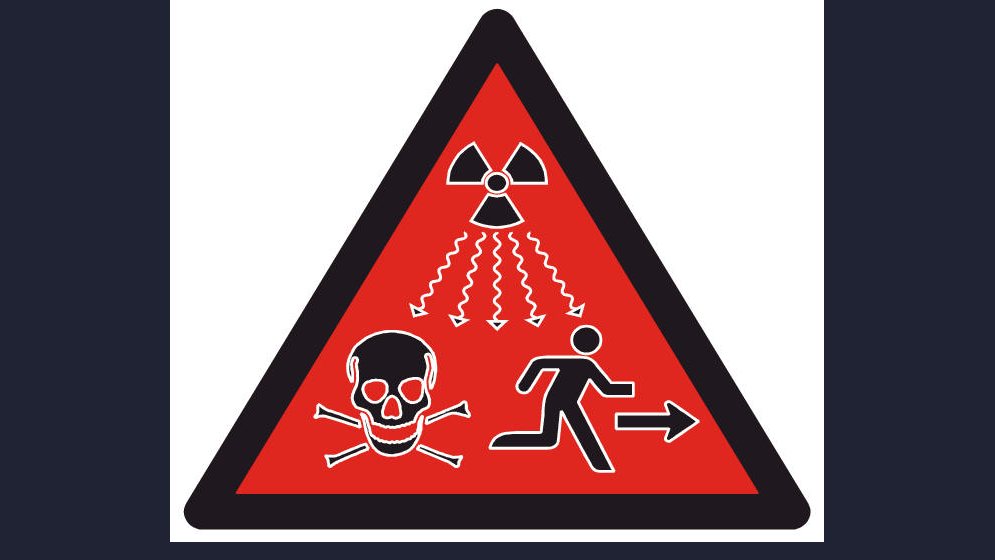
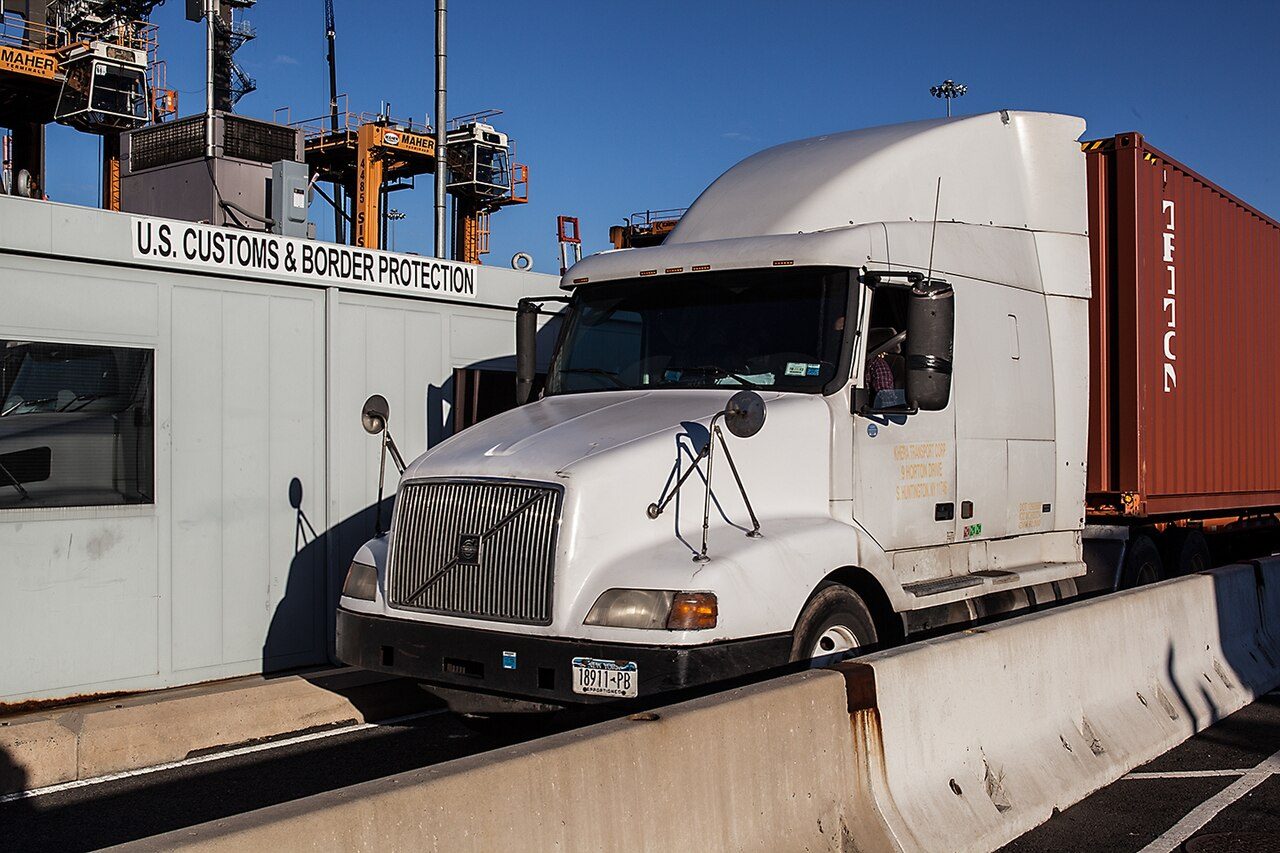
Building the explosive part is easy. Getting a strong radioactive source is not. Powerful sources are registered and tracked, many countries scan cargo and vehicles at borders, and anyone handling a strong source without shielding risks a lethal dose long before reaching a target. The best-known near case came in 1995, when Chechen separatists told a Russian television crew where to find a container of caesium they had buried in Izmailovsky Park in Moscow. It was never set off.
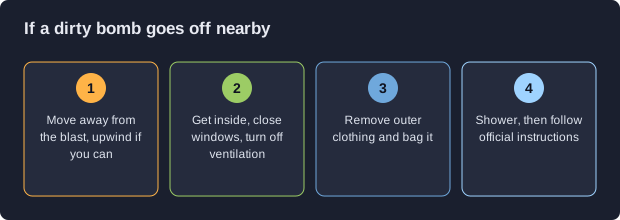
What to do if one goes off
The advice is the same as for nuclear fallout, on a much smaller scale.
- Move away from the immediate area of the blast, ideally upwind, without waiting to see what happened.
- Go inside a building, close windows and doors, and turn off ventilation that draws in outside air.
- Remove your outer clothing and bag it; according to the US Centers for Disease Control and Prevention this alone removes up to 90% of radioactive material on a person.
- Shower if you can, using plenty of soap, then follow official instructions on radio or phone.
The real danger of nuclear weapons is of another order entirely. To see the difference in scale, place a small 1-kiloton weapon over a familiar street in the simulator and imagine a dirty bomb as a single block inside its innermost ring.