


Die Nukleararsenale der Welt heute
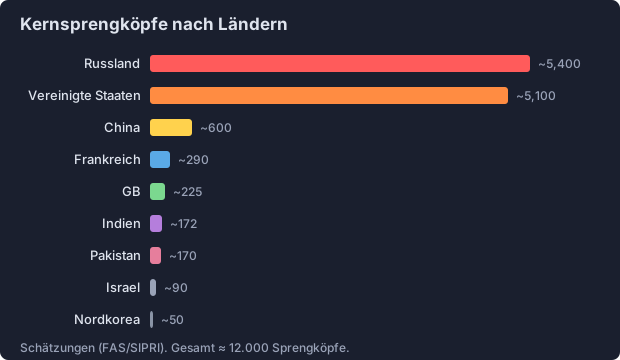
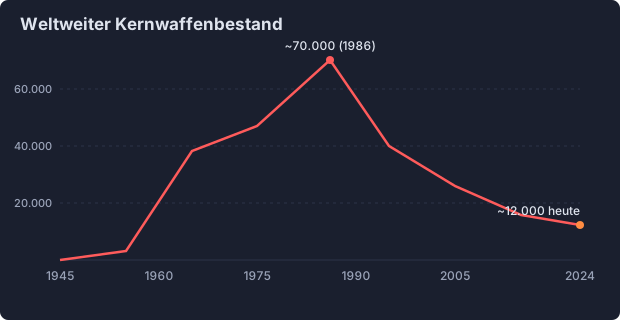
Neun Staaten besitzen heute Kernwaffen. Unabhängige Schätzungen (die Federation of American Scientists und SIPRI veröffentlichen die meistzitierten Zahlen) beziffern den weltweiten Bestand auf rund 12.000 Sprengköpfe, weniger als auf dem Höhepunkt des Kalten Krieges mit etwa 70.000 im Jahr 1986, aber immer noch genug, um die Zivilisation mehrfach zu vernichten.
Wer was besitzt
- Russland: etwa 5.400 Sprengköpfe, der größte Bestand der Welt, verteilt auf silogestützte und mobile Interkontinentalraketen (darunter die Topol-Familie und ihre Nachfolger), U-Boote und Bomber.
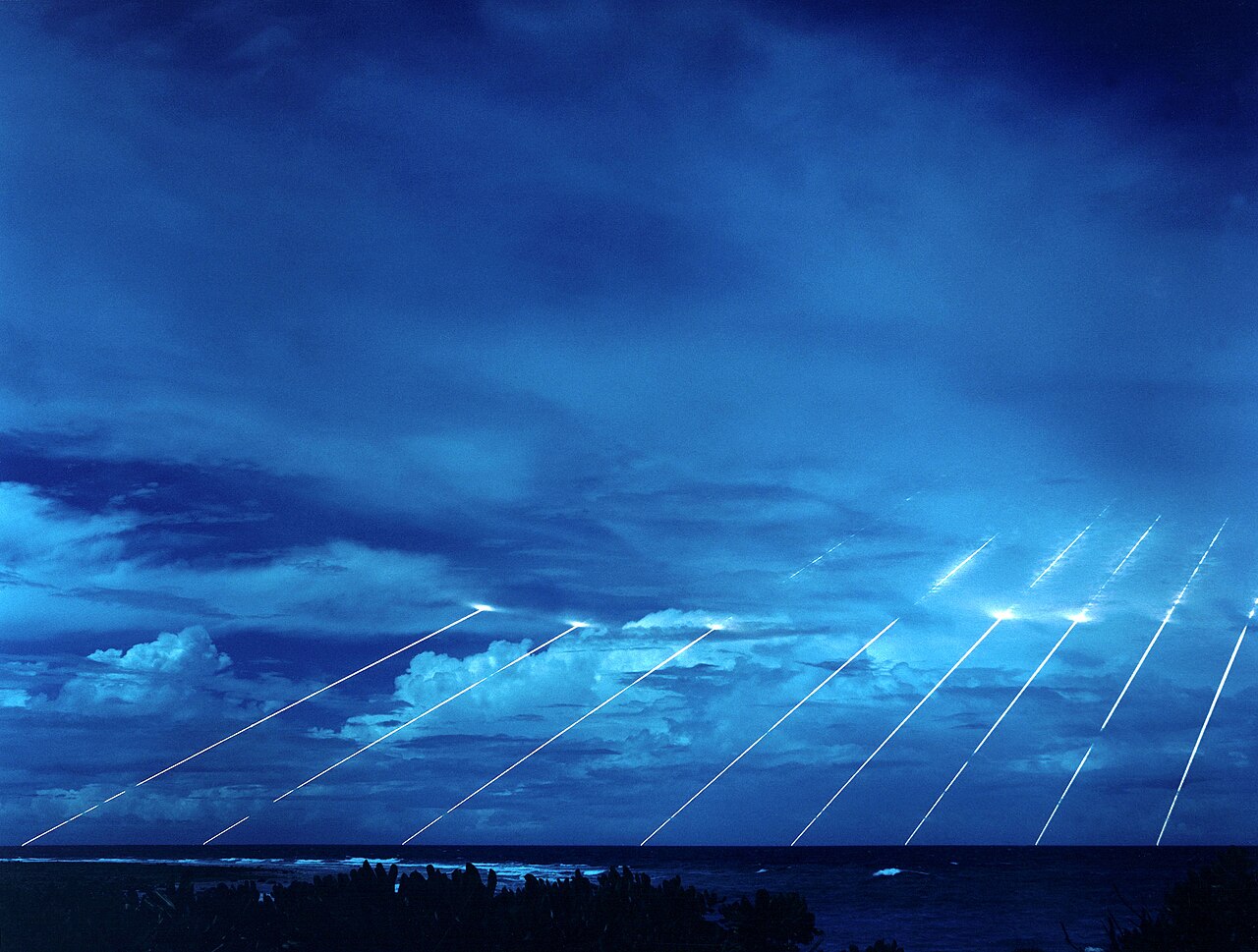
- Vereinigte Staaten: etwa 5.100 Sprengköpfe, verteilt auf die Interkontinentalraketen Minuteman III, Trident-U-Boote und strategische Bomber, darunter die 1,2-Megatonnen-Bombe B83, die stärkste Waffe im heutigen US-Arsenal.
- China: rund 600 Sprengköpfe, und der Bestand wächst schneller als jeder andere; neue Silofelder sind im Bau.
- Frankreich: etwa 290 Sprengköpfe, auf U-Booten und Flugzeugen.
- Großbritannien: etwa 225 Sprengköpfe, ausschließlich auf Trident-U-Booten.
- Indien und Pakistan: jeweils rund 170 bis 180, in einem sich rasch wandelnden regionalen Abschreckungsverhältnis.
- Israel: ein nicht deklariertes Arsenal, auf rund 90 Sprengköpfe geschätzt.
- Nordkorea: genug Spaltmaterial für mehrere Dutzend Waffen; der Test von 2017 erreichte deutlich über 100 Kilotonnen.
Stationiert oder gelagert
Nur ein Bruchteil dieser Sprengköpfe sitzt startbereit auf Raketen: einige tausend bei Russland und den Vereinigten Staaten zusammen, davon auf jeder Seite mehrere hundert in ständiger Alarmbereitschaft. Der Rest liegt in Reserve oder wartet auf die Zerlegung. Das letzte verbliebene Rüstungskontrollabkommen zwischen den USA und Russland, New START, lief im Februar 2026 aus und ließ die beiden größten Arsenale erstmals seit einem halben Jahrhundert ohne gegenseitiges Inspektionsregime zurück.
Was ein „typischer“ Sprengkopf auf der Karte bedeutet
Strategische Sprengköpfe liegen heute meist zwischen 100 und 800 Kilotonnen, jeder ein Vielfaches der Hiroshima-Bombe. Die abstrakten Zahlen werden konkret, sobald man einen davon über eine vertraute Stadt setzt: Probieren Sie einen russischen 800-kt-Sprengkopf über Washington oder einen entsprechenden Schlag auf New York, und laden Sie dann Ihre eigene Stadt im Simulator.
Sprengköpfe sind nur ein Maß für die Streitkräfte eines Landes. Unser Schwesterprojekt ArmySimulator vergleicht die konventionellen Streitkräfte und Verteidigungsbudgets von 180 Ländern.
Quellen
Die Sprengkopfzahlen sind Schätzungen, die unabhängige Forscher aus amtlichen Erklärungen, Vertragsdaten und offenen Quellen zusammentragen; die genauen Zahlen sind Staatsgeheimnisse, und die Angaben verschieben sich von Jahr zu Jahr. Hintergrund zur Funktionsweise dieser Waffen gibt die Seite Wie Kernwaffen funktionieren; was eine einzelne Detonation anrichtet, steht unter Wirkungen einer Kernexplosion.